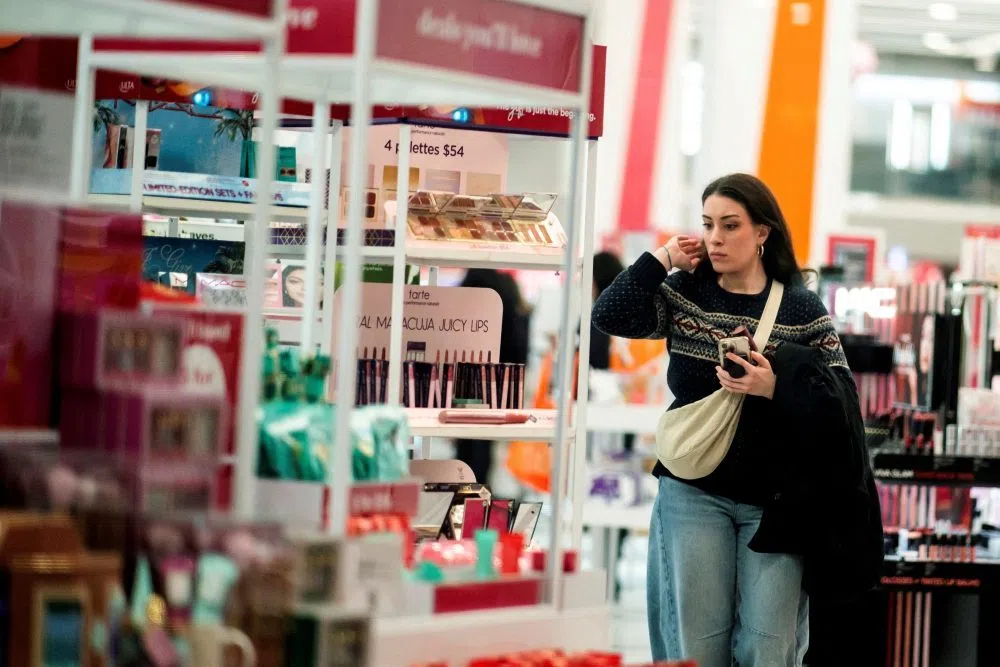
US retail sales unexpectedly stalled in December, indicating that consumer spending may be losing momentum as the year ended. Despite strong early holiday sales, December’s results showed little growth, raising concerns about the health of the economy moving into 2026.
The Commerce Department’s data revealed no change in retail purchases, following a 0.6% increase in November. Excluding auto dealers and gas stations, sales were flat, signaling a broader slowdown. The December figures suggest that the initial burst of holiday shopping activity did not carry over into the final month of the year.
Factors Behind the Slowdown
Retail sales were held back by declines in several key sectors. Clothing and furniture stores saw drops in sales, while auto dealers also posted weaker numbers. On the other hand, building materials stores and sporting goods retailers saw slight increases, offering a mixed view of consumer priorities during the month.
Concerns also exist about the distribution of consumer spending. While wealthier households may be spending more due to stock market gains, lower-income Americans seem to be struggling with limited wage growth, making discretionary spending less robust.
Impact of Winter Weather on Consumer Activity
The slowdown in retail sales came at a time when much of the US was experiencing severe winter weather. This made it difficult for economists to gauge underlying demand at the start of the year. Early indicators for January show weak auto sales and disruptions in air travel, suggesting that extreme weather conditions may have played a role in dampening consumer activity.
Thomas Ryan, North America economist at Capital Economics, noted that while the December retail figures were disappointing, they won’t significantly affect the fourth-quarter growth outlook. He also pointed to expected tax refunds as a potential driver of demand in the early part of 2026.
Control Group Sales and GDP Impact
One concerning metric from December’s retail report was the control group sales, which feed into the government’s GDP calculation. These sales unexpectedly fell 0.1%, after a downward revision in November, signaling a potential drag on overall economic growth.
Control group sales exclude food services, auto dealers, building materials stores, and gasoline stations, offering a clearer picture of goods spending. With this unexpected dip, consumption growth could slow in the upcoming quarter.
Retail Trends and Economic Outlook
Levi Strauss & Co. reported that despite raising some prices, consumer spending remained steady, especially among higher-income households. On the other hand, companies like PepsiCo and Lululemon saw strained budgets among lower-income consumers, with some even “trading down” to more affordable products.
These mixed signals suggest that while the economy may continue to show resilience, consumer spending patterns are diverging based on income levels.
Bloomberg Economics Perspective
Economists at Bloomberg suggest that the slowdown in December retail sales may be due to a “pull-forward” effect, where holiday shopping occurred earlier in the season rather than indicating weaker demand. Despite the December figures, they expect underlying demand to remain solid in early 2026, supported by larger tax refunds and positive wealth effects.
Labor Costs and Economic Pressures
Alongside the retail sales data, separate reports showed a slowdown in labor costs, with the employment cost index increasing by only 0.7% in the fourth quarter. This represents the smallest increase since 2021, suggesting that wage growth pressures may be easing, though concerns about inflation and economic stability remain.
The December data on retail sales, along with the labor cost report, paints a complex picture of the US economy. While there are signs of slowing growth in consumer spending, ongoing efforts like tax refunds and easing labor costs could provide a boost in the coming months.