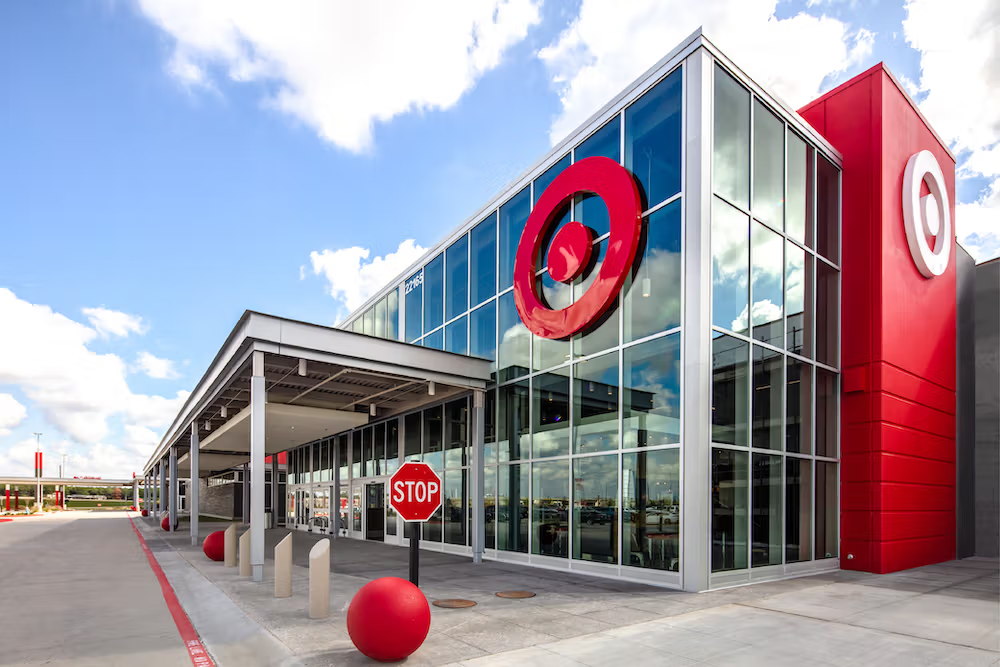
Target foot traffic dropped year over year for the sixth month in a row in July. Placer.ai reported a 3.8% decline, extending a slump that started in late January when the company scaled back diversity, equity, and inclusion programs. Store visits have been down for 25 of the last 27 weeks.
Some observers linked the downturn to DEI backlash and calls for boycotts. Yet industry veteran Walter Holbrook argues that the real problem is Target failing on retail fundamentals. Holbrook, a former Kmart executive, noted empty cart corrals during Sunday visits at a Jacksonville store. To many, this might be a small annoyance. For Holbrook, it shows Target is slipping on basics that define the shopping experience.
Retail analyst Neil Saunders reached a similar conclusion. On the Fourth of July weekend, he visited a Target and documented empty shelves, messy aisles, and missing essentials like kitchen paper. He noted that creative displays cannot compensate when shoppers leave without basics. Saunders said Target risks training customers to ask why they should even visit the store.
Target has not publicly addressed the recent foot traffic decline or reports of poor in-store conditions. Internally, challenges are visible. The Wall Street Journal reported that 40% of employees who took a company survey lacked confidence in Target’s future. That figure marks a decline from last year. CEO Brian Cornell admitted progress has been made but acknowledged that the company is not where it needs to be.
Despite the setbacks, analysts still see some strengths. Ethan Chernofsky, CMO at Placer.ai, pointed to Target’s ability to capture middle-market shoppers. Partnerships with brands such as Disney, Apple, and Casper create a unique “middle ground” between luxury and value. This positioning helps Target serve customers who want quality without paying luxury prices.
The future of Target foot traffic remains uncertain. Analysts agree that partnerships and brand collaborations are valuable. However, they also stress that success ultimately depends on fundamentals. Stocked shelves, clean stores, and reliable operations matter most. Without getting these basics right, Target risks losing more shoppers to competitors.